
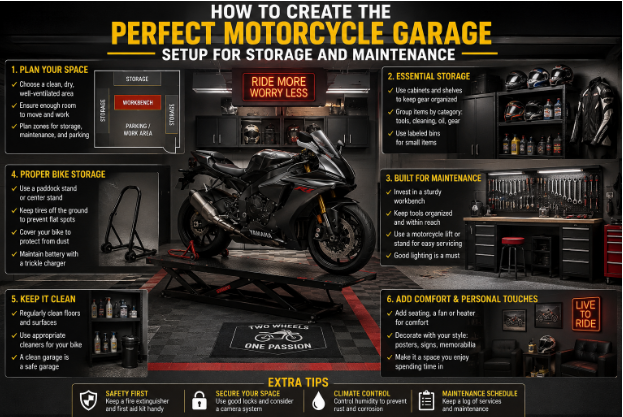
A well-planned motorcycle garage does more than keep a bike out of the weather. It gives you a clean, safe, and practical place to store riding gear, handle routine service, and keep tools within easy reach. The best motorcycle garage setup is not necessarily the largest or most expensive. It is the one that fits your bike, available space, and maintenance habits.
Even a single-car garage or compact corner can become highly functional with the right layout. By combining sensible motorcycle storage ideas with good lighting, clear work zones, and simple organization, you can reduce clutter and stop wasting time searching for tools. The goal is to create a space that feels easy to use whenever you park, clean, inspect, or work on your motorcycle.
Plan the Garage Around How You Use It
Before buying cabinets or specialty equipment, consider what you actually do in the garage. Do you mainly need secure parking and cleaning supplies, or do you regularly change oil, adjust the chain, replace filters, and inspect brakes?
Your answer should guide the layout. A storage-focused garage may only need a parking area, wall hooks, and a compact cabinet. A more complete motorcycle maintenance workspace requires room to move around the bike, safe electrical access, bright task lighting, and a stable workbench.
Measure the garage, including the door opening, outlets, windows, and fixed equipment. Then mark the motorcycle’s parking footprint with painter’s tape. This shows how much working space remains once the bike is parked.
Divide the Room Into Clear Zones
One of the most useful garage organization ideas is to give every activity a defined area. Create separate zones for:
- Motorcycle parking
- Maintenance and repairs
- Tools and spare parts
- Helmets and riding gear
- Cleaning supplies
- Used fluids and waste
The parking area should remain accessible without moving boxes. The service area should provide enough clearance to kneel, use a stand, remove body panels, and reach both sides of the motorcycle.
Clear zones also make cleanup easier. When every item has a logical home, resetting the garage takes minutes rather than becoming a major project.
Build Storage Around the Motorcycle
Effective motorcycle storage ideas use walls and corners while keeping the floor open. The aim is to store more without narrowing your walking or working space.
Choose Cabinets That Match Your Tools
Closed cabinets protect tools, lubricants, electrical parts, and cleaning products from dust. A tool chest is especially useful for frequently used hand tools.
When comparing garage storage solutions, consider drawer depth, weight capacity, mobility, and locking options. Shallow drawers suit sockets, wrenches, and pliers, while deeper drawers work better for power tools and larger equipment.
Keep common tools between waist and shoulder height. Store heavier items near the bottom so the cabinet remains stable.
Use Wall-Mounted Storage Carefully
Pegboards, magnetic strips, slatwall panels, and hooks can hold torque wrenches, funnels, brushes, cords, and chain-cleaning tools. They keep common equipment visible and easy to reach.
Avoid mounting heavy objects directly above the motorcycle. A falling tool or bin can damage the tank, windshield, mirrors, or bodywork.
Use clear divided boxes for washers, fuses, clips, bulbs, and fasteners. Label each compartment so parts are easy to find and less likely to be purchased twice.
Create a Practical Motorcycle Maintenance Workspace
A useful motorcycle maintenance workspace does not need to resemble a professional service center. It needs a durable bench, reliable lighting, accessible tools, and enough room to work safely.
Place a compact workbench along a wall, preferably near an outlet. The surface should tolerate oil, grease, minor impacts, and regular cleaning. Mount a power strip above the bench rather than running cords across the floor.
A rolling cart is another practical addition. Load it with the tools needed for the current task, move it beside the bike, and return it to storage afterward.
Leave enough floor clearance for a suitable stand or wheel chock. Before lifting the bike, confirm that the stand is rated for its weight and positioned on a stable, level surface.
Improve Lighting and Electrical Access
A bright garage is safer and makes maintenance less frustrating. A single ceiling fixture often creates shadows around the engine, wheels, and underside of the motorcycle.
Combine overhead lighting with a focused workbench light and a portable inspection lamp. Rechargeable magnetic lights are useful when you need both hands free. Neutral or daylight-style illumination can make leaks, damaged wiring, worn fasteners, and fluid discoloration easier to see.
Keep cords away from walking paths and wet areas. Avoid running chargers, compressors, heaters, and power tools from one overloaded outlet. Where electrical access is inadequate, use a qualified electrician rather than permanent extension cords.
Choose a Safe, Easy-to-Clean Floor
The floor affects stability, cleanup, and comfort. Bare concrete is durable, but it can stain and become slippery when wet. Floor coatings may simplify cleanup, while vehicle-rated interlocking tiles can improve comfort and appearance.
Check the load rating of any flooring placed beneath a motorcycle stand. An absorbent mat under the bike can catch drips, while an anti-fatigue mat near the bench improves comfort.
Keep the main path free of hoses, cords, tools, and fluid containers to reduce falls and accidental damage.
Build Safety Into a DIY Motorcycle Workshop
A DIY motorcycle workshop should make routine work easier without encouraging shortcuts. Keep a fire extinguisher, safety glasses, gloves, a first-aid kit, spill absorbent, and containers for used fluids nearby.
Do not run the motorcycle for extended periods in a closed garage. Store fuel, solvents, and chemicals in approved containers away from heat or sparks. Keep children and pets away from tools, chemicals, batteries, and raised motorcycles.
Give Riding Gear Its Own Station
Helmets, jackets, gloves, boots, and rainwear can quickly create clutter. Set up a gear station near the door so everything stays together and remains separate from oily tools.
Use wide hangers for heavy jackets, ventilated shelves for helmets, and a tray for dirty boots. Small baskets work well for gloves, earplugs, and spare visors.
This is one of the easiest garage organization ideas to implement, and it makes preparing for a ride faster because essential gear stays in one predictable location.
Keep the Setup Easy to Maintain
The best system is one you will continue using. Keep frequently used supplies in accessible bins, hand tools in labeled drawers, and chemicals inside closed cabinets.
After each job, return tools, wipe the bench, store fluids safely, dispose of waste correctly, and sweep around the motorcycle. This five-minute reset prevents clutter from rebuilding.
It is also useful to keep a service log. Record the date, mileage, parts used, and work completed. This helps you plan future maintenance and identify recurring issues.
Common Setup Mistakes to Avoid
Avoid filling every wall before checking clearance. Do not store heavy objects above the motorcycle, use weak shelving, block exits, or leave cords across walking areas.
A functional DIY motorcycle workshop should feel open and predictable. Correct placement matters more than quantity.
Frequently Asked Questions
How much room is needed for a motorcycle garage setup?
The bike may fit into a small area, but you need extra clearance for walking, using a stand, and reaching both sides. The required space depends on the motorcycle’s size and the work you plan to perform.
What are the best motorcycle storage ideas for a small garage?
Use vertical wall storage, compact cabinets, folding workbenches, hooks, and labeled containers. Keep rarely used items higher up while leaving the floor around the motorcycle open.
What should a basic motorcycle maintenance workspace include?
Include good lighting, a stable work surface, organized hand tools, safe electrical access, spill-control supplies, protective equipment, and enough clearance to work around the bike.
Can I create a DIY motorcycle workshop on a limited budget?
Yes. Begin with better lighting, basic tool storage, wall hooks, a sturdy secondhand bench, and essential safety supplies. Add carts, cabinets, stands, and specialty tools as your needs grow.
Conclusion
Creating an effective motorcycle garage setup is mainly about planning the space around the way you ride, store equipment, and maintain your bike. Clear zones, vertical storage, dependable lighting, and a durable work surface can transform even a modest garage into a practical place to work.
The strongest setup is not crowded with unnecessary equipment. It keeps the motorcycle accessible, protects tools and riding gear, and makes routine service safer and more efficient. Start with the essentials, test the layout, and improve it gradually. With practical garage organization ideas and carefully chosen motorcycle storage ideas, you can build a garage that stays functional instead of becoming another cluttered room.

