
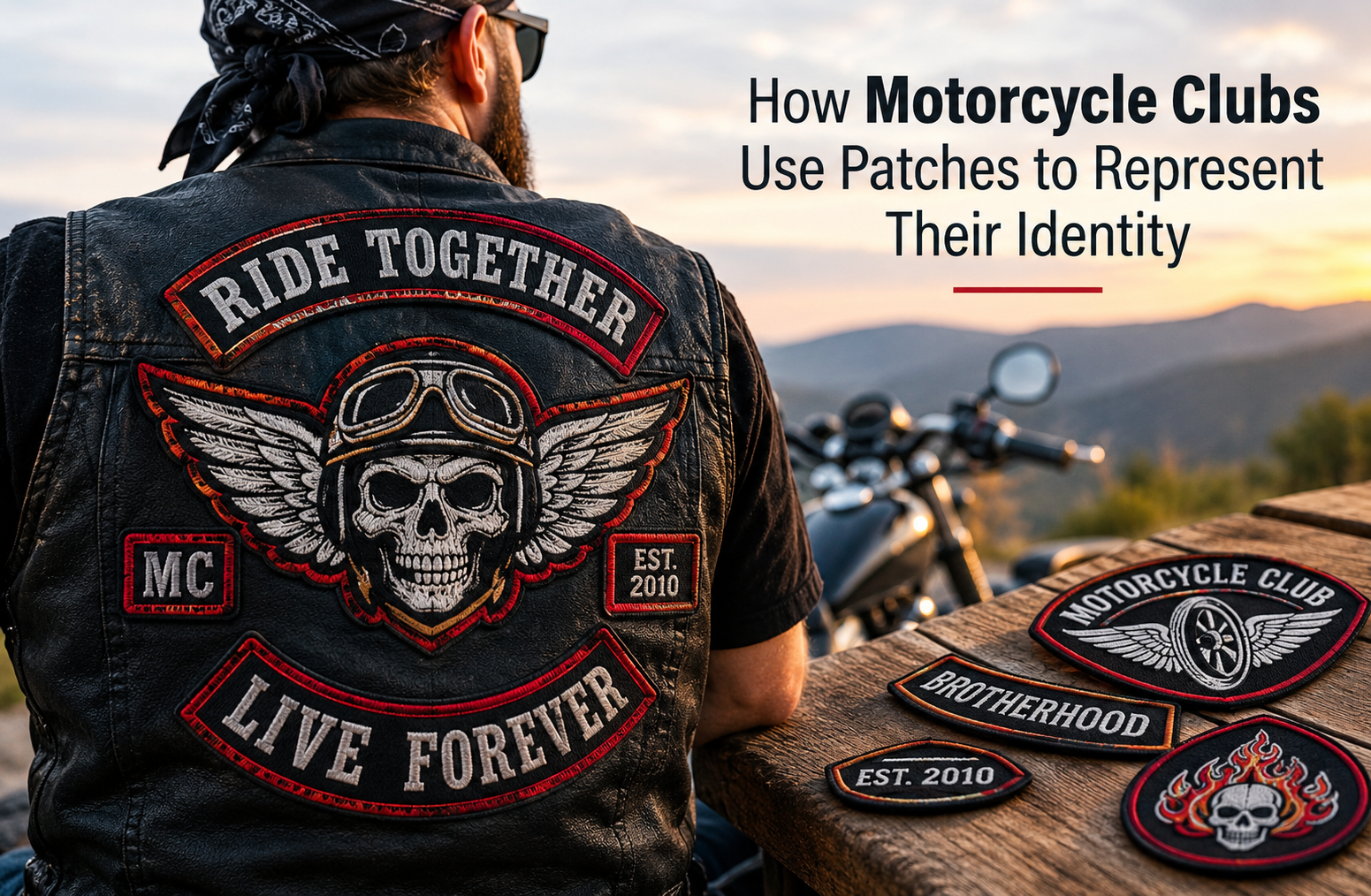
Motorcycle club patches represent a club’s identity, history, and shared values. They help members show their connection to a riding community. These patches often appear on motorcycle jackets, leather vests, and riding gear. Their designs can include club names, logos, locations, and meaningful symbols.
For many riders, a club patch is more than decoration. It represents friendship, loyalty, shared experiences, and a passion for motorcycles. Understanding the meaning behind these patches helps riders appreciate their role in motorcycle culture.
1. What Do Motorcycle Club Patches Represent?
Motorcycle club patches identify a club and communicate its visual identity. They can show a club’s name, location, founding year, and distinctive emblem. Members often wear them on matching jackets or vests to express their connection to the group.
Common elements found on motorcycle club patches include:
-
Club name: Identifies the motorcycle club and distinguishes it from other riding groups.
-
Club logo: Uses artwork, lettering, or symbols to create a recognizable identity.
-
Location: Shows the city, state, or region associated with the club.
-
Founding year: Highlights when the club was established.
-
Personal symbols: Represents a club’s interests, traditions, or shared experiences.
Not every club uses the same design or layout. Some prefer simple embroidered logos, while others use detailed artwork and multiple patches. The design usually reflects the club’s history, preferences, and traditions.
2. How Custom Motorcycle Patches Help Clubs Build Their Identity
Custom motorcycle patches allow clubs to create designs that reflect their unique identity. Instead of using generic artwork, clubs can choose their own logos, colors, lettering, and symbols. These details help members recognize one another and express their shared interests.
Clubs can customize patches in several ways:
-
Custom artwork: Create a unique emblem featuring motorcycles, eagles, skulls, wings, or other meaningful designs.
-
Club colors: Select colors that match the club’s existing branding and apparel.
-
Personalized lettering: Add the club’s name, motto, location, or founding year.
-
Different shapes: Choose round, rectangular, shield-shaped, or other custom patch outlines.
-
Matching designs: Create coordinated patches for jackets, vests, riding gear, and club merchandise.
The choice of patch style also affects its appearance. Embroidered patches have raised stitching and a traditional look. Woven patches support fine details and smaller lettering. PVC patches offer a raised, rubber-like finish, while printed patches can reproduce complex artwork and gradients.
Clubs should consider their design, intended use, and apparel before choosing a patch type. A well-planned design can help maintain a consistent appearance across members’ riding gear.
3. The Role of Patches in Motorcycle Club Traditions
Motorcycle club patches can preserve traditions and mark important moments in a club’s history. Some clubs use patches to celebrate anniversaries, memorable rides, charity events, or special achievements. These designs can become lasting reminders of shared experiences.
For example, a club might create a commemorative patch for its annual motorcycle rally. Members can keep the patch as a souvenir or display it on their riding gear. Other clubs may use event patches to recognize participation in group rides and community activities.
Some motorcycle clubs also have established rules about patch designs, placement, and who can wear particular insignia. These traditions vary between organizations. Riders should respect a club’s rules and avoid copying protected or distinctive club insignia without permission.
Patch traditions can also help newer members understand a club’s history. Experienced riders may explain the meaning behind specific symbols, colors, and designs. This helps pass shared stories and values between generations of members.
4. Where Do Motorcycle Clubs Display Their Patches?
Motorcycle clubs commonly display patches on leather vests, denim jackets, and other riding apparel. Placement depends on the club’s traditions, garment design, and the type of patch.
Common locations include:
-
Back panels: Large designs can display a club logo or other prominent artwork.
-
Front chest: Smaller patches can show a member’s name, club emblem, or other approved details.
-
Shoulders and sleeves: These areas can accommodate smaller decorative or commemorative patches.
-
Club merchandise: Patches can also appear on caps, bags, and other accessories.
Some clubs use a coordinated arrangement of patches across members’ vests. Others allow more individual customization. Members should check their club’s guidelines before adding or moving any insignia.
The right placement also depends on the garment. A patch should sit flat, remain visible, and avoid interfering with pockets, seams, or protective riding equipment.
5. Choosing the Right Patches for Motorcycle Club Apparel
Choosing the right patch involves more than selecting an attractive design. Clubs should consider the material, stitching, size, backing, and durability of each patch. These details affect how well the patch looks and performs during regular use.
Embroidery is a popular option for traditional motorcycle club designs. Its textured stitching creates a classic appearance and works well for bold lettering and logos.
Woven patches use fine threads to create detailed designs. They are suitable for smaller text, intricate symbols, and artwork requiring clean edges.
PVC patches have a flexible, raised surface that can withstand regular handling. Their distinctive appearance makes them useful for modern riding apparel and accessories.
Printed patches reproduce detailed artwork, including gradients and photographic-style designs. They are useful when a club’s emblem contains many colors or fine visual details.
Clubs should also consider the backing. Sew-on patches provide a traditional attachment method, while iron-on backings may suit some compatible fabrics. Hook-and-loop backing allows patches to be removed and replaced when needed.
Before ordering, clubs should confirm their preferred dimensions, design file, backing, and garment material. Reviewing a digital proof helps ensure that the lettering, colors, and artwork match the club’s requirements.
6. How Motorcycle Clubs Maintain Their Patches
Proper care helps motorcycle patches retain their appearance over time. Riding gear can experience sunlight, rain, dust, friction, and frequent washing. These conditions may gradually affect stitching, fabric, and printed details.
Here are some practical ways to maintain club patches:
-
Follow garment care instructions: Check the jacket or vest label before washing or cleaning.
-
Avoid harsh cleaning products: Strong chemicals can damage threads, adhesives, and patch surfaces.
-
Inspect patch edges: Look for loose stitching, peeling corners, or other signs of wear.
-
Store apparel properly: Keep jackets and vests in a dry place away from excessive moisture.
-
Repair loose patches: Address damaged stitching early to prevent further separation.
Leather jackets and vests may require specialized cleaning. Avoid soaking leather garments or using excessive heat to dry them. For valuable or traditional club apparel, professional cleaning may be appropriate.
7. Why Motorcycle Patches Remain Important to Biker Culture
Motorcycle patches remain an important part of biker culture because they connect visual identity with shared experiences. A club emblem can represent years of friendship, group rides, community involvement, and personal memories.
For motorcycle clubs, patches offer a recognizable way to display their name and heritage. Members can wear coordinated designs that reflect their group’s traditions while celebrating their own riding experiences.
Custom designs also give clubs flexibility as they grow and change. They can introduce commemorative patches, update approved artwork, or create special designs for club events. By choosing meaningful symbols and respecting established traditions, clubs can use patches to preserve their identity for years to come.
Ultimately, motorcycle patches are more than accessories. They are wearable expressions of community, history, and the connections that bring riders together.
Conclusion
Motorcycle club patches represent more than a club’s name or logo. They reflect shared values, traditions, friendships, and memorable riding experiences. From custom artwork to meaningful symbols, each patch helps communicate a club’s identity.
Choosing the right materials, design, and placement also helps clubs maintain a consistent appearance. With thoughtful designs and proper care, motorcycle patches can preserve club heritage and celebrate the connections that bring riders together.

