
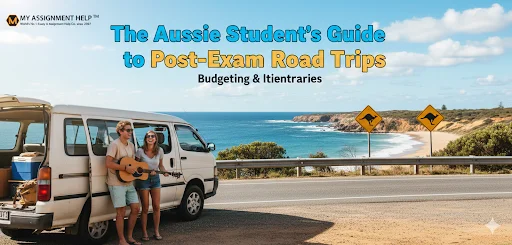
The final pen has been dropped, the laptop lid is closed, and the weight of finals season has finally lifted. There is no feeling quite like the liberation that follows a grueling semester. But after weeks of caffeine-fueled library sessions and staring at flickering screens, you don’t just need a nap—you need a total reset.
Australia, with its 25,000 miles of coastline, ancient rainforests, and neon-lit cities, is the ultimate playground for a post-exam detox. Whether you’re looking to surf the breaks of Byron Bay or watch the sunrise over Uluru, a road trip is the gold standard of student travel. It offers the flexibility to change plans on a whim and the chance to create memories that far outlast any lecture notes.
However, a truly “perfect” road trip doesn’t happen by accident. Between budgeting for fuel, navigating the vast Outback, and ensuring you don’t have any lingering academic loose ends, preparation is key. Many students find that hiring a professional online assignment writer to polish their final submissions before they depart ensures they can truly switch off their phones and immerse themselves in the journey without the dread of a “resubmission” email.
1. Choosing Your Route: Three Iconic Itineraries
Australia is massive—roughly the size of the contiguous United States. You can’t see it all in two weeks, so you must choose your “vibe.”
The East Coast Classic (Sydney to Cairns)
- Distance: ~1,500 miles
- Best For: First-timers, surfers, and party-goers.
- Highlights: The Blue Mountains, Byron Bay, K’gari (Fraser Island), and the Great Barrier Reef.
The Great Ocean Road (Melbourne to Adelaide)
- Distance: ~600 miles
- Best For: Nature lovers and photographers.
- Highlights: The Twelve Apostles, Loch Ard Gorge, and the Otway Rainforest.
The Red Centre Way (Alice Springs Loop)
- Distance: ~700 miles
- Best For: Adventure seekers looking for spiritual and geological awe.
- Highlights: Uluru, Kata Tjuta, and Kings Canyon.
2. Budgeting for the Open Road
According to Tourism Australia, the average domestic traveler spends roughly $150–$200 AUD per day on a road trip, but students can cut this significantly.
| Expense Category | Estimated Cost (Per Day) | Money-Saving Tip |
| Fuel | $30 – $50 | Use apps like PetrolSpy to find the cheapest gas. |
| Accommodation | $25 – $80 | Mix free camping sites with hostels. |
| Food | $20 – $40 | Buy a portable gas stove and cook your own meals. |
| Activities | $50 | Look for student discounts on reef tours or skydiving. |
If you find that your travel fund is a bit short because you spent your savings on extra tuition or academic resources, remember that you can effectively manage your workload and finances by choosing to pay for assignments from reliable services, allowing you to work a few extra shifts at your part-time job before you hit the road.
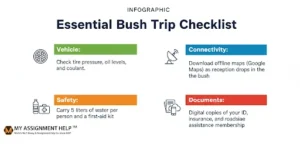
3. The “Road-Ready” Infographic: Pre-Trip Checklist
4. Understanding the “Big Lap” Logistics
Australia’s climate varies wildly. If you are heading North (Queensland or NT) after exams in November/December, you are entering “The Wet” season. It’s humid and stormy. Conversely, the South (Victoria and SA) is enjoying peak summer.
Data Insight: A 2023 report by Budget Direct noted that 1 in 5 Australian road-trippers experienced a mechanical breakdown. When driving through the Outback, the distance between service stations can exceed 200 miles. Always fuel up when you see a station, even if you have half a tank.
5. Staying Productive (The “Soft” Return)
As a student, the “post-exam” period often bleeds into the “results” period. If you’re waiting on grades or have an internship application due while you’re mid-transit, ensure you have a portable power bank and a dedicated “admin hour” every few days at a local library or cafe with free Wi-Fi.
Key Takeaways for a Stress-Free Trip
- Don’t Over-Schedule: Limit driving to 3–4 hours a day to avoid fatigue and enjoy the destinations.
- Respect the Land: Follow “Leave No Trace” principles, especially in National Parks.
- Safety First: Avoid driving at dawn or dusk when kangaroos and emus are most active and likely to cause accidents.
- Tech is Your Friend: Use WikiCamps for the best campsites and Spotify for those long stretches across the Nullarbor.
FAQ: Frequently Asked Questions
Q: Can I rent a car in Australia if I’m under 25?
A: Yes, but most rental companies charge a “Young Driver Surcharge” and may restrict the types of vehicles you can hire.
Q: Is it safe to sleep in my car?
A: It depends on local council laws. Generally, “freedom camping” is restricted to designated areas. Use the CamperMate app to find legal spots.
Q: What happens if I have a pending academic issue while traveling?
A: It’s best to settle all academic matters before leaving. If you have an unexpected paper or revision due, reaching out to an academic consultant can help you manage the load while you stay on the move.
Author Bio:
Liam Anderson is a Senior Academic Consultant and Content Strategist at MyAssignmentHelp. With over a decade of experience in educational counseling and travel writing, Liam specializes in helping students balance rigorous academic schedules with mental well-being and exploration. When he isn’t helping students achieve their GPA goals, he is usually exploring the rugged coastlines of Western Australia in his converted 4WD.
Sources & References:
- Tourism Australia (2024). “State of the Industry: Domestic Travel Trends.”
- Bureau of Meteorology (BOM). “Seasonal Weather Hazards for Road Users.”
- Budget Direct (2023). “Road Trip Safety and Breakdown Statistics.”
- Transport for NSW. “Staying Safe on Rural Roads.

