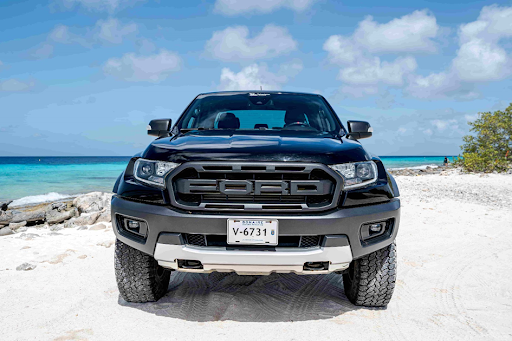
Motorbike Touring vs Off-Road 4×4 Exploration
Adventure travel comes in many forms, but two of the most popular ways to explore
remote landscapes are motorcycle touring and off-road 4×4 driving.
Both promise freedom, both attract thrill seekers, and both offer a direct connection to
the road or terrain in front of you. Yet the experience they deliver is fundamentally
Different.
To understand which is better, it is more useful to compare them across real travel
factors rather than romantic ideas. Comfort, accessibility, cost, safety, and flexibility
all play a role. Depending on your destination, one can clearly outperform the other.
Freedom: Two Different Definitions
Motorcycle touring is often described as the purest form of travel freedom. You feel
every curve of the road, every change in temperature, and every shift in landscape.
There is no barrier between you and the environment. This creates a strong sense of
immersion that is difficult to replicate.
Off-road 4×4 travel defines freedom differently. Instead of exposure, it offers
independence. You can carry more gear, travel longer distances without fatigue, and
handle terrain that would be difficult or impossible on two wheels. In remote areas,
this often means access rather than experience.
In short, motorcycles offer sensory freedom, while 4×4 vehicles offer practical
freedom.
Terrain and Accessibility
Motorcycles excel on paved roads and well-maintained mountain routes. Twisting
coastal highways, alpine passes, and desert roads are ideal for bike touring.
However, motorcycles quickly reach their limits on deep sand, loose gravel, or muddy
off-road tracks.
This is where 4×4 vehicles dominate. High clearance, traction systems, and stability
make them suitable for harsh terrain. In destinations with mixed or undeveloped
infrastructure, they are often the only realistic option.
A good example is island environments where conditions vary widely. On Bonaire, for
instance, many secondary roads and nature areas are better accessed by off-road
capable vehicles than motorcycles, especially when carrying equipment or traveling
in extreme heat.
Comfort and Endurance
Motorcycle touring is physically demanding. Long hours in the saddle, exposure to
weather, wind fatigue, and vibration all add up. Even experienced riders need regular
breaks to maintain focus and safety.
A 4×4 offers a controlled environment. Air conditioning, seating comfort, and
protection from weather allow for longer continuous travel. This makes it more
suitable for travelers who want to cover large distances without physical strain.
The trade-off is engagement versus comfort. A motorcycle keeps you constantly
involved in the journey, while a 4×4 lets you relax and observe.
Safety Considerations
Safety is one of the biggest differences between the two.
Motorcycles are inherently more exposed. Road conditions, visibility, and driver
behavior from others all have a greater impact on risk. Protective gear reduces
danger, but does not eliminate it.
4×4 vehicles provide structural protection. Seatbelts, airbags, and chassis design
significantly reduce exposure to injury in most scenarios. They are also more stable
in unpredictable conditions such as sudden weather changes or rough terrain.
However, 4×4 driving introduces its own risks, especially when drivers overestimate
capability in difficult terrain.
Storage and Travel Practicality
Motorcycles are limited when it comes to storage. Even with panniers or top cases,
space is restricted. This becomes a challenge on longer trips or when carrying
specialized gear such as camping equipment or diving equipment.
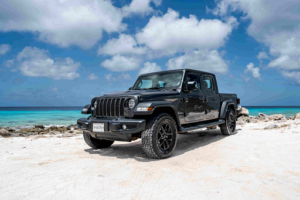
4×4 vehicles excel in this category. They can carry luggage, tools, food, water, and
sports equipment with ease. This makes them ideal for multi-purpose travel where
flexibility matters more than minimalism.
For example, travelers visiting remote coastal or desert areas often prefer vehicles
that can handle both passengers and equipment without compromise.
Cost Efficiency
Motorcycle touring is generally more cost-effective. Fuel consumption is lower,
maintenance is cheaper, and rental costs are often reduced compared to larger
Vehicles.
4×4 vehicles cost more to operate. Fuel consumption is higher, rental prices are
greater, and maintenance complexity adds to long-term expenses.
However, cost must be evaluated alongside purpose. A cheaper option that limits
access or comfort may not always be the best choice for certain destinations.
Experience vs Practicality
Motorcycles are about emotional experience. The sound of the engine, the wind, and
the direct interaction with the road create a strong sense of adventure. Riders often
describe the journey itself as the destination.
4×4 travel is about exploration with control. It prioritizes reach, comfort, and
versatility. It allows travelers to focus on destinations rather than the mechanics of the
Journey.
Neither is objectively better. They simply serve different travel philosophies.
When Each Option Wins
Motorcycles are ideal when:
- Roads are well maintained
- Distances are moderate
- Weather is stable
- The goal is immersive riding experience
4×4 vehicles are ideal when:
- Terrain is rough or mixed
- Travel involves heavy luggage or equipment
- Comfort and safety are priorities
- Remote exploration is required
Final Verdict
The debate between motorcycle touring and off-road 4×4 exploration does not have a
universal winner. It depends entirely on context.
If your goal is to feel every moment of the journey, a motorcycle is unmatched. If your
goal is to reach more places with less limitation, a 4×4 is the superior tool.
The smartest travelers often understand that these are not competing ideas, but
complementary ones. In some destinations, the best experience might even involve
both.