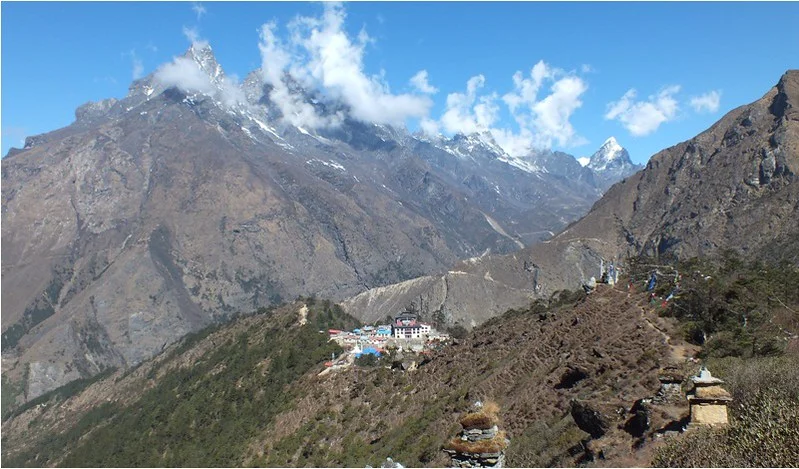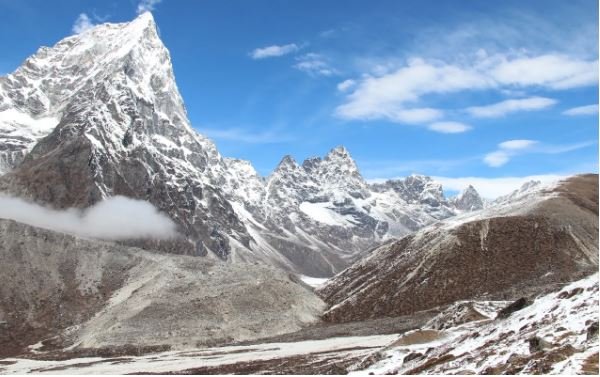
The Short Everest Base Camp Trek is an exciting adventure that takes you into the heart of the Himalayas in a limited time. Although it is a short route in comparison to the classic one, it goes to high elevation as well and requires physical preparation. Everest Base Camp is at 5,364 meters (17,598 ft), which will be visited during the trip, as well as such places as Namche Bazaar at 3,440 meters (11,286 ft) and Tengboche at 3,867 meters (12,687 ft).
Due to these altitudes, it is important to train well to go to the Short Everest Base Camp Trek. Most individuals of average fitness can train successfully with a 4–6-week plan. This guide clarifies the way to prepare your body, stamina, and strength, and to psychologically equip yourself for this journey to remember.
Understanding the Physical Demands
It is essential to know what the trek is before you start with your training plan. The short Everest Base Camp Trek involves 5-7 hours per day of hiking over rough mountainous paths over a period of 3 or 4 days. You will ascend thousands of stone steps, suspension bridges, and long walks uphill.
Speed is not the issue, but stamina. You do not have to run; you must be able to walk long distances over a number of hours at an elevation of more than 3000 meters (9843 ft). The higher you climb, the thinner the air is, and this means that your body receives less oxygen. This will even make simple movement more difficult than it normally is.
The Short Everest Base Camp Trek training should be based on three key areas, which are cardiovascular endurance, leg strength, and general stamina.
Building Cardiovascular Endurance
Cardiovascular fitness allows the heart and lungs to work effectively. It is particularly significant when hiking at elevated altitudes of 4,000 meters (13,123 ft) and higher.
In case there are 6 weeks to prepare, begin with moderate cardio activities 3 or 4 times a week. One can walk briskly or jog, cycle, swim, or use a treadmill with an incline. The time per session should be 30 minutes, then 45-60 minutes bit by bit.
In case you have only 4 weeks, do at least 4 cardio sessions in a week. Concentrate on consistency, not intensity. You should be able to talk while exercising, but not sing comfortably. This effort does not overtrain and makes one endure.
Hill walking is particularly useful. Also, you should use hills and stairs in your exercises, if you have them. A 20–30-minute stair climb would be close to the climbers’ uphill climbs at the Short Everest Base Camp Trek.
Your training should enable you to walk for at least one hour at a time without being fatigued at the end of your exercise.
Strengthening Your Legs and Core
Powerful legs are needed for long, steep climbs and steep descents. It is a difficult task to go down as it is to go up, particularly to your knees.
The training for the Short Everest Base Camp Trek should comprise exercises that build strength 2 to 3 times per week. Pay attention to the basic exercises like squats, lunges, step-ups, and calf raises. These are the exercises that focus on the muscles that you are going to make the most use of in the trek.
Step-ups are the most effective. A strong bench or a step should be used, and it is necessary to practice stepping up and down. The movement is quite similar to hiking mountain trails. Gradually increase light weights as long as you feel comfortable doing so.
The stomach and lower back are also core muscles and are important. A firm stomach enhances stability and eliminates exhaustion. Simple body exercises such as planks and mild abdominal exercises suffice. You do not have to spend complicated workouts in the gym. Stability is of greater significance than severity.
Practicing Long Walks with a Backpack
Long walks with a packed bag are also one of the most significant components of Training to the Short Everest Base Camp Trek. Although most of your luggage may be carried by porters, you will still come with a daypack containing water, snacks, and other personal items.
Begin to walk with a light backpack of 3-5 kilograms (6-11 lbs). Progressively make your walks longer in distance every week. Providing there is a chance, plan one longer walk per week on weekends. Aim for 2-4 hours at a steady pace.
It is a good way to get your shoulders and back used to carrying weight. It also gives you a chance to test your hiking shoes and socks, thereby eliminating the chance of getting blisters during the actual trek.
Better still, you can walk on natural trails as opposed to flat roads. The uneven surface enhances the balance and the small stabilizer muscles.
Improving Stamina and Recovery
Stamina does not merely relate to strength. It is concerning the speed of the recovery of your body. The Short Everest Base Camp Trek will have several days of continuous walking. Repeated effort has to be dealt with by your body.
Rest and stretching are things to pay attention to improve recovery. You need to have at least one day of full rest per week during training. Moving slowly after exercises will help in alleviating muscle stiffness and enhancing flexibility.
Your preparation also includes hydration and nutrition. You should drink enough water at the time of training, as it will be on the trek. Consume healthy food in a balance of carbohydrates as an energy source, protein to repair muscles, and healthy fats to keep the body generally healthy.
In case of the pain that is not relieved by rest, decrease the training intensity. It is preferable to come a little short of training than to be hurt.
Preparing for High Altitude
It is not possible to exactly recreate the high-altitude conditions at home, unless you are living at a higher altitude. Nevertheless, high cardiovascular fitness allows your body to adapt more easily.
In the Short Everest Base Camp Trek, they have properly acclimatized days, typically in Namche Bazaar at 3,440 meters (11,286 ft), but also occasionally in Dingboche at 4,410 meters (14,469 ft). These rest days assist your body to adapt to lean air.
Altitude sickness cannot be completely avoided; however, training equips your body to be better placed to deal with physical stress. Aim to do calm breathing when exercising. Take walks slowly and steadily. The habit will assist you in saving energy at altitudes that are above 5000 meters (16404 ft).
It is also important to be mentally prepared. Understand that at elevated altitudes, it is natural to walk slowly. It involves patience in the process.
Creating a Simple 4–6 Week Plan
Assuming that you have 6 weeks, the first two weeks should be dedicated to the development of basic cardio fitness. Week 3 and 4 add duration and add hills or stair climbing. During the last two weeks, add more weekend increases, using a backpack.
When you are pressed for 4 weeks, it is time to exercise cardio and strength together. Attend 4 cardio sessions and 2 strength sessions per week. Include an extra-long hike every weekend.
The Short Everest Base Camp Trek does not involve the use of costly gadgets or membership to a gym. Simple bodyweight exercises like walking, stair climbing, and the like at home are enough, provided one does them regularly.
The key is gradual progress. Gradually increase distance and intensity to prevent injury.
Choosing the Right Gear During Training
Your training period is also the time to test your gear. Put on the hiking shoes that you will be using in the Short Everest Base Camp Trek. Early breaking in of your boots helps to avoid blisters.
Walking in layers can be practiced if you can. The temperatures of the Everest area may fluctuate. The weather can be mild at lower altitudes, such as Lukla, located at 2,860 meters (9,383 ft). At an elevation of 5,364 meters (17,598 ft) or so, around Everest Base Camp, it is likely to be freezing, especially in the morning and evening.
Knowing the feel of your clothes when you are active will assist you in making a good pack.
Building Mental Strength
The Short Everest Base Camp Trek is not a simple physical trip but also a psychological one. Some days may feel long. The weather can change quickly. Trails can be steep and rocky.
Mental preparation implies that one should tolerate these forms of discomfort as a part of the experience. When you are training, work on being positive when you are fatigued. Concentrate on breaths and minor objectives, like the next hill or landmark.
Preparation gives confidence. With every training session, you get to be one step closer to being at the base camp of Everest.
Final Thoughts
The Short Everest Base Camp Trek is a difficult, but not impossible, adventure that can be performed by a great number of people with appropriate preparation. In 4-6 weeks of hard and regular training, you will be able to increase your stamina, power, and confidence.
Preparations for the Short Everest Base Camp Trek must consist of daily cardio, strengthening of legs and core, long walks with a pack, and sufficient rest. Although you cannot completely train at home, being strong in overall fitness helps a lot.
The reward of being in the Everest Base Camp, which is 5,364 meters (17,598 ft) above the ground, with giant Himalayan mountains, is never forgettable. Under proper preparation, your trip can be secure, entertaining, and extremely satisfying.